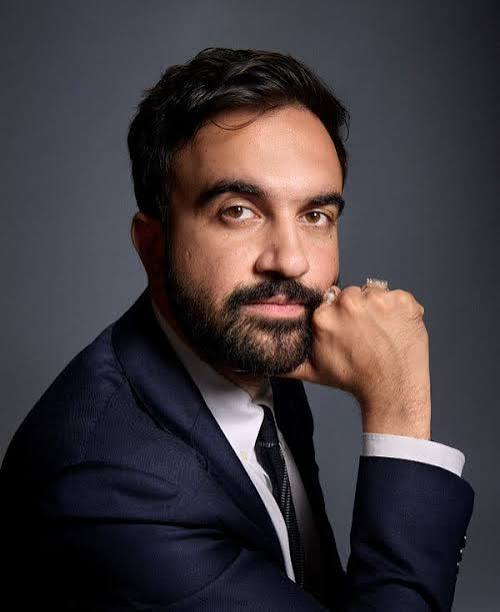
Republicans in Washington are now targeting Zohran Mamda, New York City’s mayor-elect, trying to strip him of his U.S. citizenship.
Their claim is that he may have lied during his naturalization process — though no one has produced a single piece of proof. The attack follows his historic election as the city’s first Muslim and South Asian mayor, which seems to have made certain politicians deeply uncomfortable.
Mamdani, born in Uganda, came to the United States as a child in 1998 and became a citizen in 2018. At 34, he won the mayoral race with a campaign centered on equality, affordable housing, and public safety reform. But instead of congratulations, he now faces accusations of being a communist and a supporter of terrorism. The charges come from far-right lawmakers eager to paint him as un-American.
Representative Andy Ogles called Mamdani “a communist who has publicly embraced a terroristic ideology,” demanding an investigation into his naturalization process. Florida’s Randy Fine made similar remarks, claiming Mamdani “did not meet the definition to gain citizenship.” Both men have offered no evidence, relying on speculation and fear to fuel the story.
The idea that a sitting U.S. mayor-elect could lose citizenship is almost unheard of. Denaturalization — the legal term for revoking citizenship — can only happen through a federal court order. It’s typically reserved for serious fraud or crimes such as hiding a history of war crimes or terrorism.
Immigration attorney Jeremy McKinney explained that “denaturalization is an extreme, rare remedy” and requires “clear, unequivocal and convincing evidence” that an individual’s lie was material to their approval. None of that exists in Mamdani’s case.
The accusations are built around two claims.
First, Republicans point to Mamdani’s 2017 rap lyrics that mentioned the “Holy Land Five,” a group convicted of providing material support to Hamas. Legal experts note that writing lyrics is protected speech, not an act of terrorism.
The second claim concerns his membership in the Democratic Socialists of America (DSA). Ogles and Fine call the DSA a communist group, though historians and legal experts reject that. The DSA operates legally in the U.S., and its members regularly run for office.
Harvey Klehr, a historian at Emory University, clarified that democratic socialism “rejects the communist hostility to representative democracy and state ownership of all industry.” Simply put, joining the DSA does not disqualify anyone from citizenship, nor is it a lie worth losing citizenship over.
The Council on American-Islamic Relations (CAIR) described the Republican campaign against Mamdani as racist and Islamophobic. For many Muslims in America, the hostility surrounding his election felt familiar. Mamdani himself has spoken about this, saying on MSNBC, “Islamophobia is something that is endemic to politics across this country. We have seen it normalized, and we have seen it accepted.”
The push to investigate Mamdani reflects a growing pattern in U.S. politics. When traditional attacks fail, some politicians resort to questioning an opponent’s legitimacy. The same tactic was used against Barack Obama, with baseless claims that he was not born in America. Now it’s being repeated against Mamdani, even though he followed every legal step required to become a citizen.
Republicans in New York have even tried to use the 14th Amendment as a weapon, arguing that Mamdani gave “aid and comfort” to enemies of the United States. Legal experts immediately dismissed this interpretation. The amendment targets those who engage in insurrection or rebellion — not those who criticize government agencies or support humanitarian causes.
Case Western Reserve University professor Cassandra Burke Robertson said it is “extraordinarily unlikely” that any case against Mamdani could succeed. She warned that the real danger is the chilling effect these attacks can have. Immigrants who speak up politically may start to fear that their citizenship could be questioned, even after years of living legally in the U.S.
The Justice Department’s rules make clear that denaturalization cannot happen simply because someone is unpopular or holds controversial opinions. The government must prove beyond doubt that the person knowingly lied about something material — not that they wrote a song or joined a political group.
Featured image via Youtube Screengrab