What could have been a routine check became a clash. The White House reacted swiftly after the Supreme Court struck down Trump’s sweeping global tariffs in a 6–3 ruling for exceeding his 1977 emergency powers. Within minutes, the president and his aides signaled this was more than a legal setback — it was a challenge to his economic agenda and authority.
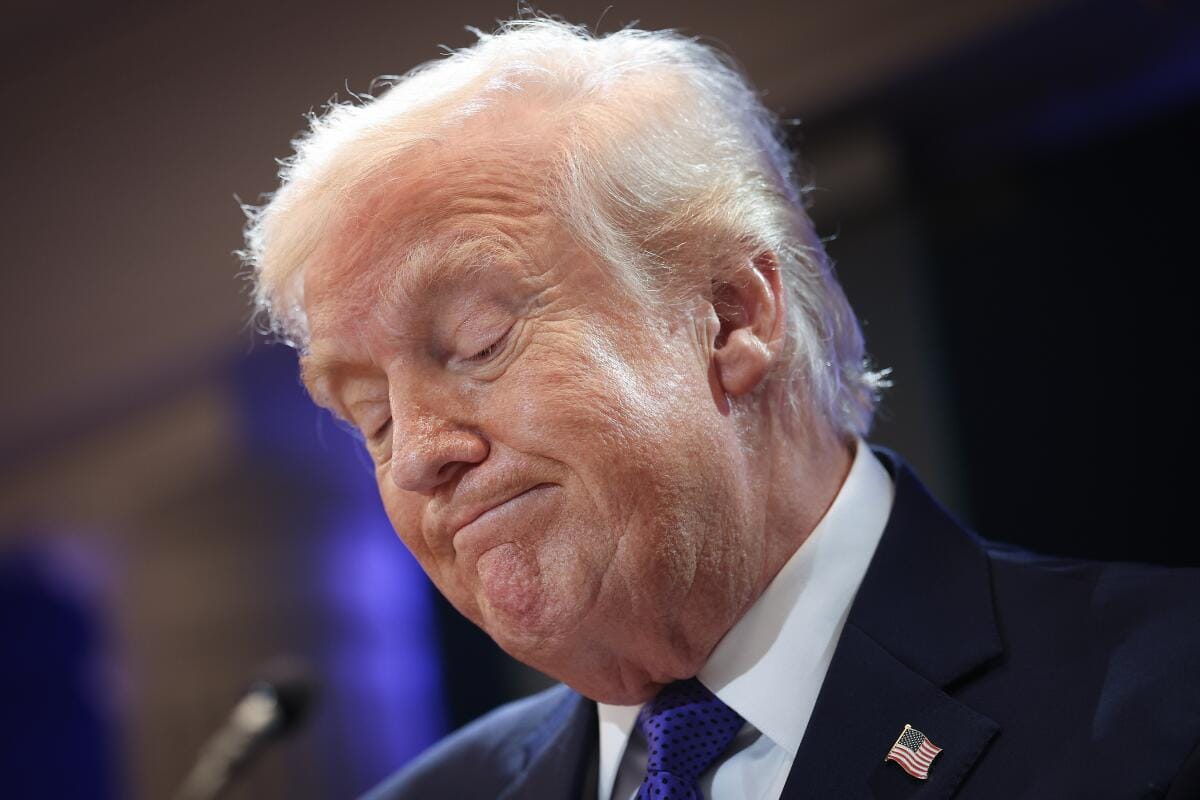
President Donald Trump did not describe the decision as a technical statutory dispute. He called it “deeply disappointing” and said he was “ashamed of certain members of the Court, absolutely ashamed for not having the courage to do what’s right for our country.” He labeled the majority opinion “a disgrace to our nation,” signaling that he saw the ruling as both legally flawed and politically charged.
The Court’s majority — led by Chief Justice John Roberts and joined by Justices Sonia Sotomayor, Elena Kagan, Neil Gorsuch, Amy Coney Barrett and Ketanji Brown Jackson — concluded that the International Emergency Economic Powers Act (IEEPA) does not grant a president unilateral authority to impose broad import tariffs without explicit congressional authorization.
Trump’s criticism was not limited to the Court’s liberal bloc. He praised the three dissenters, Justices Clarence Thomas, Samuel Alito and Brett Kavanaugh for their “strength and wisdom and love of our country.”
But he reserved sharp words for others, including two of his own appointees. Referring to Gorsuch and Barrett, Trump said they were “against anything that makes America strong, healthy and great again,” and suggested their votes were “an embarrassment.”
“They’re just being fools and lap dogs” for political opponents, Mr. Trump said. “They’re very unpatriotic and disloyal to our Constitution. It’s my opinion that the court has been swayed by foreign interests and a political movement that is far smaller than people would ever think,” he added.
He went further, suggesting without evidence that “foreign countries” were celebrating the decision. “This must have been done to protect those other countries, certainly not the United States of America,” he said, implying the ruling benefited overseas interests at the expense of American workers.
The tariffs at issue had generated tens of billions of dollars in federal revenue and reshaped trade dynamics with major partners. Their invalidation raises immediate questions about enforcement, potential refunds and the scope of executive authority during economic emergencies. But in the White House briefing room, the focus was less on legal mechanics and more on political resolve.
Trump quickly pivoted to what he described as “a backup plan.”
He announced that his administration would pursue alternative statutory authority, including a new 10 percent global tariff under Section 122 of the Trade Act of 1974, which permits temporary import restrictions while Congress considers further action. “We have other options,” he said. “And we’re going to use them.” The message was clear: the trade fight would continue, even if the legal foundation shifts.
The confrontation also spilled into symbolism. Asked whether the justices who ruled against him would attend the upcoming State of the Union address, Trump replied, “They’re barely invited.” The remark underscored how quickly the episode has evolved from a judicial ruling into a high-visibility political standoff.
On Capitol Hill, reactions fell along familiar lines. Some Republican allies described the decision as judicial overreach that constrains executive flexibility in moments of economic urgency. Democrats and several business groups characterized it as a reaffirmation of constitutional checks and balances and a stabilizing move for markets rattled by abrupt tariff shifts.
Featured image by Kevin Dietsch / Getty Images