
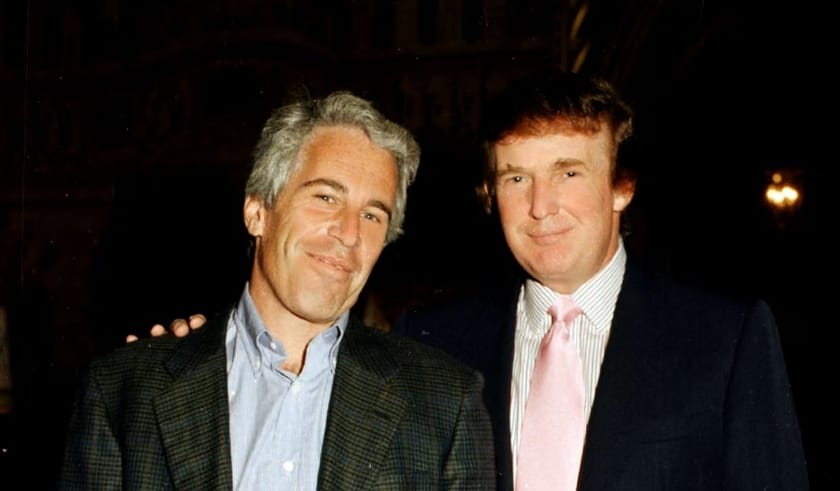
President Donald Trump signed a law this month that forces the Justice Department to publish more records tied to Jeffrey Epstein. The move came after an unusual bipartisan push in Congress and a discharge petition that pushed the issue into the open.
The files matter because Epstein’s case touched powerful people and left many questions unanswered. That history is now wrapped up in politics and in a fight over what the public should see. Survivors and some lawmakers say the records could show what investigators knew and where the system failed.
Trump’s past link with Epstein has taken center stage. In a 2002 interview Mr. Trump said, “He’s a lot of fun to be with. It is even said that he likes beautiful women as much as I do, and many of them are on the younger side.” That line has been replayed as reporters and lawmakers press for clarity about the former ties.
The Capitol even released a page from what it calls Epstein’s birthday album. One note ends, “may every day be another wonderful secret.” The image and the talk around it turned a private scrap into public proof that the story still has the power to shock and to sting.
For months Attorney General Pam Bondi promised big disclosures. She told audiences the FBI had handed over a “truckload” of material and that “Everything’s going to come out to the public.” Those words raised expectations that a full picture might finally appear.
Then the narrative shifted. The Justice Department later said no clean client list exists and moved to limit what it would release. Officials argued they must protect victims and ongoing work, but the sudden turn fed claims that politics, not only law, shaped the choices.
That tug of war became raw politics. During the 2024 campaign some in Mr. Trump’s orbit treated the files as a campaign weapon. Once back in power, the same team pulled back and then appeared to use the process to try to score points. At one public moment the president snapped at reporters and asked, “Are you still talking about Jeffrey Epstein?” The outburst showed how tense the subject is for him and for his allies.
Congress forced the next move. A discharge petition and wide votes in both chambers pushed a bill to the president’s desk. He signed it on November 19, setting a tight deadline for release while also allowing redactions to protect victims and secret information. That mix makes the coming drop likely to be messy, partial and contested.
As the files near release, leaders on both sides warn the result may be a jumble. The Justice Department will need to cut names and pages to shield people who must stay private. Lawmakers worry the review itself could be used to shield the powerful or to embarrass political foes.
Featured image via X screengrab