A widening transatlantic tariff dispute has drawn sharp reactions from world leaders and political figures after President Donald Trump’s recent trade moves sparked criticism in Europe and at home. The focal point is ongoing tension over trade policy after the U.S. Supreme Court struck down parts of Trump’s tariff program and the administration responded with a new global tariff, prompting global scrutiny and pushback.
French President Emmanuel Macron spoke publicly this week about the Supreme Court’s decision and Washington’s latest tariff actions. At an agricultural salon in Paris, Macron said that the U.S. high court’s ruling — which declared Trump’s use of a 1977 emergency powers statute to impose broad trade duties illegal — underlines the role of checks and balances in democratic systems.
“It is not bad to have a Supreme Court and, therefore, the rule of law,” Macron said. “It is good to have power and counterweights to power in democracies.” He added that France would assess the consequences of Trump’s 10 percent global tariff and adapt accordingly while continuing to export key goods
French officials, including Trade Minister Nicolas Forissier, have said the European Union possesses instruments to respond to U.S. tariffs if necessary, ranging from export controls to potential retaliatory duties and barriers affecting U.S. companies and goods.
Across Europe, officials have been vocal. Macron has emphasized calm and reciprocity in trade rather than unilateral actions, urging adherence to international norms amid U.S. policy shifts. The EU’s broader stance, according to French leadership, is to consider measured responses that protect European exporters in agriculture, luxury goods, fashion and aerospace sectors.
Reaction within U.S. political circles has also surfaced. Gavin Newsom, a frequent Trump critic and emerging national political figure, drew the president’s ire recently over unrelated policy disagreements. Newsom’s engagement on international initiatives, including a green energy memorandum with British officials, prompted sharp language from Donald Trump.
“Gavin is a loser. Everything he’s touched turns to garbage. His state has gone to hell, and his environmental work is a disaster,” Trump said in an interview with Politico, where he also criticized the partnerships as inappropriate.
Newsom’s dispute with Trump adds a domestic political layer to the broader trade debate, as both figures continue to position themselves on economic and environmental policies, relative to the White House agenda.
European leaders have voiced broader concerns about unpredictable trade policy. Prior reporting tied Trump’s tariff threats to fractured transatlantic cooperation, noting that threats of punitive duties over geopolitical disagreements — such as disputes around Greenland — drew warnings from allied capitals about risks to NATO cohesion and trade relationships.
Market responses have been evident as well. Financial indicators, including equities, bonds and currencies, showed volatility when tariff threats were first aired, signaling caution among investors about potential escalation in trade barriers.
Business communities and export-reliant sectors in Europe and the United States are evaluating the real-world effects of shifting tariffs, amid ongoing uncertainty about trade rules, exemptions and future negotiations.
At the same time, leaders like Macron are urging a reciprocal, rules-based approach to international trade, reinforcing the idea that unilateral tariffs and counter-measures could reshape long-standing economic ties between major trading blocs.
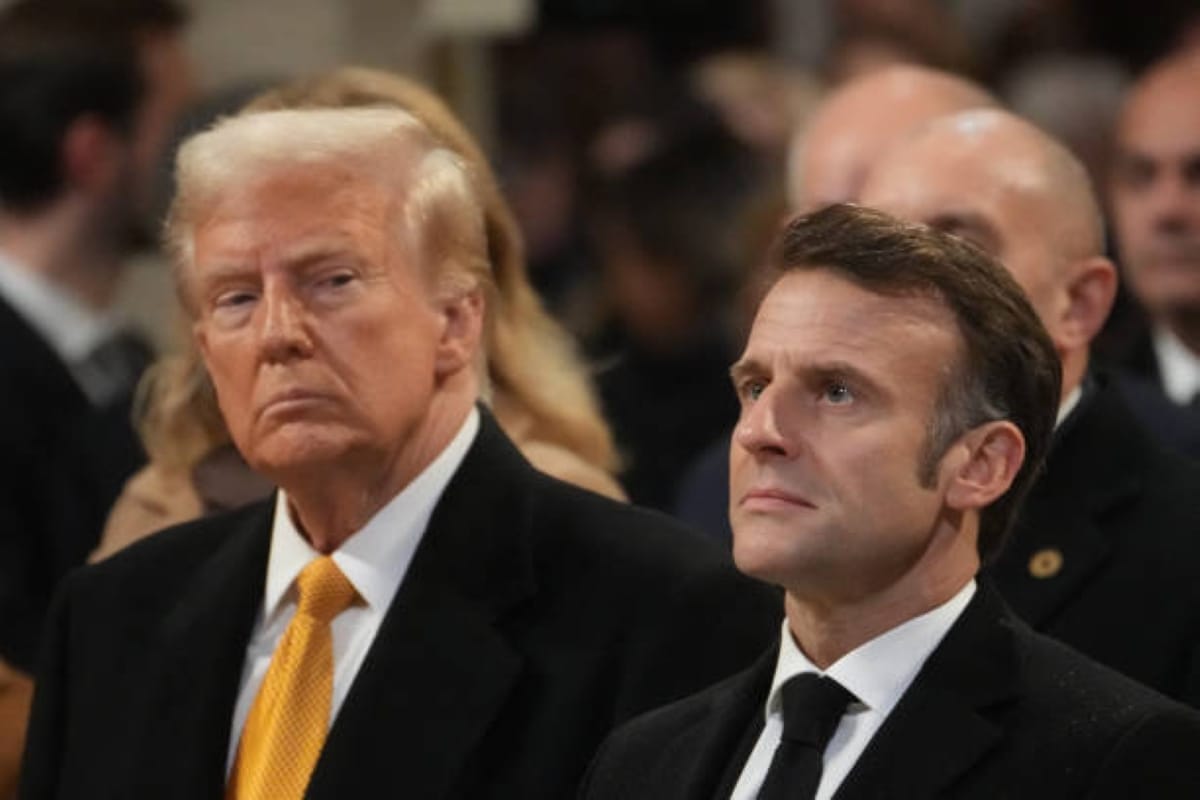
Featured image by Thibault Camus / Getty Images