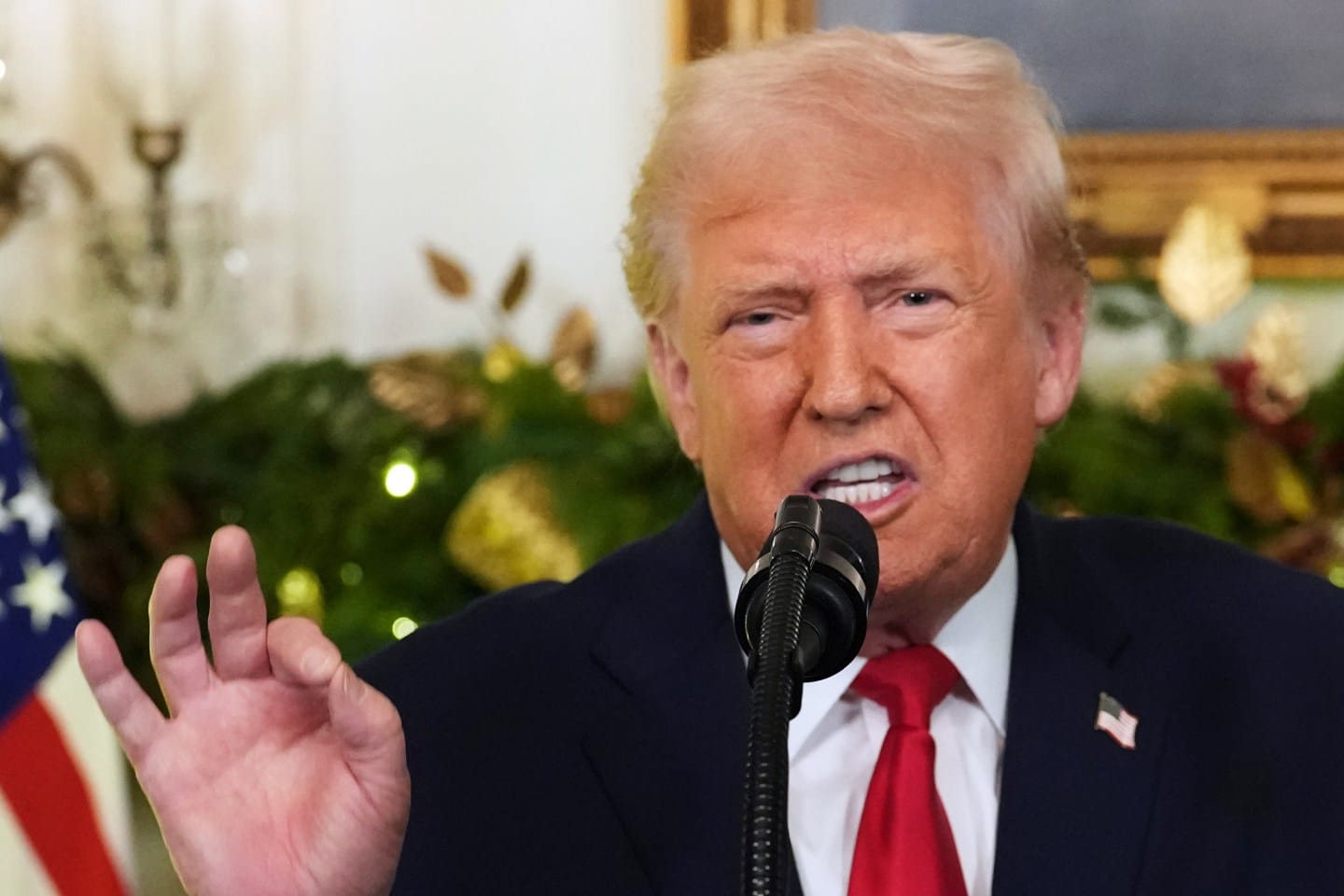
Donald Trump has announced tariffs on eight European countries and tied the move to his demand that the United States be allowed to buy Greenland.
The tariffs start at 10% on February 1 and will rise to 25% on June 1 if no deal is reached, the president wrote in a long post on Truth Social and said in public remarks.
The list of countries named by the president includes Denmark, Norway, Sweden, France, Germany, the United Kingdom, the Netherlands and Finland. Officials in those countries called the move alarming and said decisions about Greenland rest with Denmark and the people of Greenland.
Mr. Trump linked the tariffs to national security and to visits by European forces to Greenland this month. He wrote, in full, “Only the United States of America, under PRESIDENT DONALD J. TRUMP, can play in this game, and very successfully, at that!” and he warned that “This is a very dangerous situation for the Safety, Security, and Survival of our Planet.”
The tariffs are being defended by the White House as a tool to force negotiations on a Greenland sale that Mr. Trump says has been attempted by many presidents over 150 years. At the same time, legal questions hang over the policy. Courts have already struck down parts of Mr. Trump’s earlier tariff program and the Supreme Court is now weighing whether the president may use emergency powers to impose such levies.
European governments say their small recent deployments to Greenland were planning teams and training missions. Denmark described the activity as cooperative and aimed at protecting the Arctic region, not a provocation. NATO led exercises and multinational planning have grown in the region in recent weeks.
Local reaction in Greenland and in Denmark was swift. Protests with the slogans “Hands off Greenland” and “Greenland is not for sale” drew crowds in Nuuk and in Copenhagen, while Danish leaders warned that sovereignty issues must be settled through law and politics.
The demonstrators in Nuuk, have now reached the area in front of the American consulate. People are still continuing to arrive from the city center.
January 17, 2026 (1:40pm)#StandWithGreenland 🇬🇱 pic.twitter.com/JVBcuwYLPQ
— Orla Joelsen (@OJoelsen) January 17, 2026
Trade experts say the new duties could ripple through supply chains and raise prices for U.S. consumers, who may see the cost of imported goods rise even as tariff revenue flows into government coffers. Some Republican lawmakers and business groups have expressed concern that the move will harm allies and strain long standing security ties.
Mr. Trump framed the policy as urgent. He wrote that “Starting on February 1st, 2026, all of the above mentioned Countries … will be charged a 10% Tariff on any and all goods sent to the United States of America. On June 1st, 2026, the Tariff will be increased to 25%.” Those words are now at the center of a fast moving diplomatic dispute that could test alliances and trade rules.
Legal experts and market watchers are watching the Supreme Court case closely. If the court finds the use of emergency powers unlawful, the president’s tariff plan could be reversed and refunds may be required, a prospect that adds uncertainty for businesses on both sides of the Atlantic.
Featured image via X screengrab





[…] also warned of new tariffs. He said the United States would impose a 10% import tax on several European countries unless […]