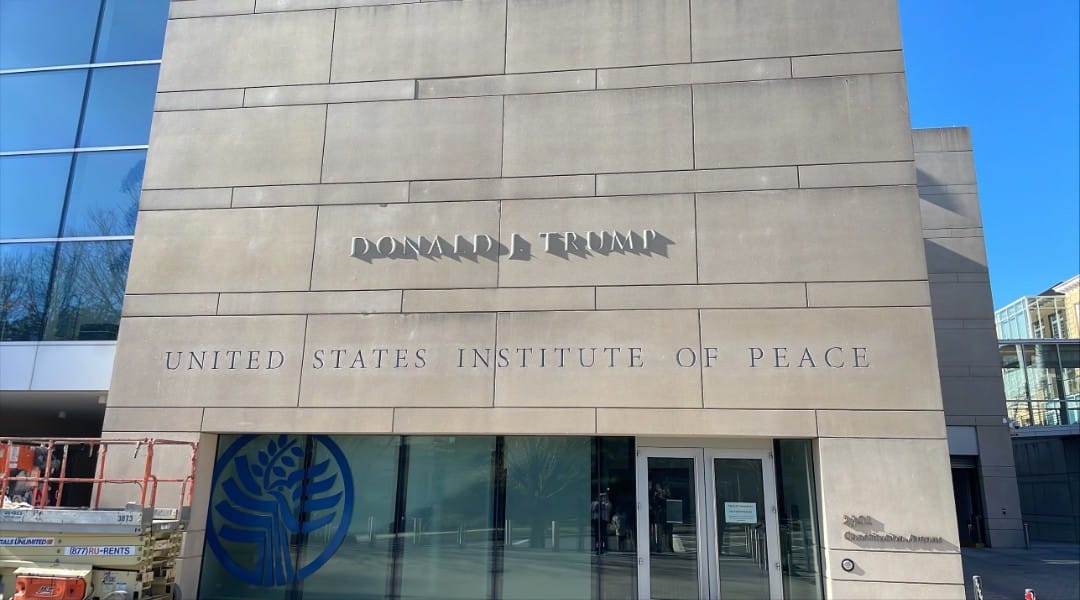
On Wednesday, the White House stunned Washington, D.C., by adding President Donald Trump’s name to the building that houses the U.S. Institute of Peace, instantly rebranding it as the “Donald J. Trump Institute of Peace.”
This morning, the State Department renamed the former Institute of Peace to reflect the greatest dealmaker in our nation’s history.
Welcome to the Donald J. Trump Institute of Peace. The best is yet to come. pic.twitter.com/v7DgkoZphn
— Department of State (@StateDept) December 3, 2025
Workers installed large silver letters on the exterior of the building, making Trump’s name visible to everyone on the National Mall. The timing was deliberate. The president was scheduled to host a signing ceremony with the presidents of Rwanda and the Democratic Republic of Congo for a peace deal. The renaming added a photo-ready backdrop for the event.
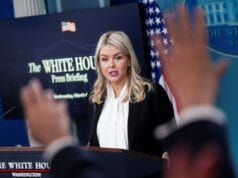
The White House described the change as a celebration of “strong leadership” and global stability. Spokeswoman Anna Kelly called the USIP, once “a bloated, useless entity that blew $50 million per year while delivering no peace,” a reminder of Trump’s accomplishments — and added, “Congratulations, world!”
Congratulations, world! 🕊️ https://t.co/IT3sXitRwd
— Anna Kelly (@AnnaKelly47) December 4, 2025
According to her, the building now honors a president who ended 8 wars in less than a year — a claim that has drawn widespread skepticism.
The building itself has long been a symbol of American diplomacy. Opened in 2012, it is a 150,000-square-foot glass-and-steel structure designed to represent peace, transparency, and openness. It was built with a combination of federal and private funds and sits on land originally owned by the Navy, which transferred control to the institute more than 20 years ago.
The dramatic renaming follows months of turmoil. In February, Trump issued an executive order to dismantle the institute, a Congress-created organization designed to promote peace around the world. Law enforcement removed the USIP’s president from the building, and nearly all of the D.C.-based staff were fired. Offices were cleared, and the institute’s logo — a dove holding an olive branch — was removed.
Former staff and the institute’s board responded with legal action, arguing that Trump had no authority over the organization. A federal judge agreed in May, ruling that the president acted unlawfully. The decision was temporarily stayed during the appeal process, leaving the building under White House control.
George Foote, the attorney representing the former leadership, said that renaming the building “adds insult to injury.” He emphasized that the original owners will ultimately restore the building and institute to their intended purpose.
The Trump administration defended the move as recognition of the president’s global peacemaking efforts. Officials highlighted agreements that Trump claimed to broker between Israel and Hamas, as well as promises to work toward peace between Ukraine and Russia. Trump himself has repeatedly emphasized his desire to be seen as a peacemaker, even joking in October, “Hard to believe, right? Did you ever think I was going to be called a peacemaker? I did.”
The renaming fits a larger pattern of branding. By placing his name on a national symbol of diplomacy, Trump creates a visual message that centers him in any international achievement, regardless of the complex realities behind each situation.
The USIP building remains at the heart of a legal and ethical fight. Former staff continue international work independently while planning protests against the renaming. The appeals court is expected to rule next year on whether the White House has the authority to retain control.
Beyond the legal issues, the act raises questions about the use of public spaces. A building designed to foster international cooperation is now closely associated with one individual’s ego. The sleek glass structure, meant to inspire reflection on peace, has become a backdrop for self-promotion.
Featured image via X screengrab