Questions about President Donald Trump’s cognitive fitness have resurfaced, reigniting a debate that has shadowed him for years. This time, the spark came from a detailed report in Raw Story examining his recent public remarks and behavior, framing them as potential warning signs rather than mere rhetorical flair.
The article amplified concerns raised by critics who argue that certain verbal missteps and late-night social media posts deserve closer scrutiny. Those concerns, however, stand in direct contrast to official medical assessments released by Trump’s own physicians.
Last year, following a comprehensive physical at Walter Reed National Military Medical Center, the White House physician declared Trump “fully fit” to serve. According to reporting from The Washington Post, the evaluation included neurological testing and found no abnormalities in cognitive function. The physician’s memo stated that Trump “exhibits excellent cognitive health” and showed no signs of impairment during examination.
Trump himself has repeatedly leaned into that narrative. In public appearances, he has reminded audiences that he “aced” a cognitive test — a reference to the Montreal Cognitive Assessment, a screening tool designed to detect mild cognitive dysfunction. Speaking previously about the exam, Trump said, “I got every answer right,” and added, “It’s not that easy.” Medical professionals, however, have noted that the assessment is a basic screening instrument, not a comprehensive measure of intelligence or executive capacity.
California Governor Gavin Newsom recently suggested Trump may be experiencing “sundowning,” a term used in medical contexts to describe increased confusion in the evening among some elderly patients. While Newsom did not provide clinical evidence, his remarks reflects how medical terminology is increasingly being used as political shorthand.
Trump has responded forcefully to such claims. In a Truth Social post reacting to coverage in The New York Times, he called reporting about his health “seditious, perhaps even treasonous,” insisting that repeated examinations — including cognitive testing and imaging — demonstrate his continued fitness.
“After all of the work I have done with Medical Exams, Cognitive Exams, and everything else, I actually believe it’s seditious, perhaps even treasonous, for The New York Times, and others, to consistently do FAKE reports in order to libel and demean ‘THE PRESIDENT OF THE UNITED STATES,’” he wrote, reiterating that critics are pushing a political narrative rather than a medical one.
Medical ethics also complicate the conversation. The American Psychiatric Association’s Goldwater Rule discourages professionals from diagnosing public figures without a personal examination and consent. That guideline has been repeatedly cited since 2016 as mental health experts weigh whether public commentary crosses ethical boundaries.
At 79, Trump would be among the oldest presidents in U.S. history if he completes another term. Age inevitably invites scrutiny. Yet scrutiny alone does not equal diagnosis.
For now, the public record shows a president whose official medical evaluations describe him as cognitively sound, and critics who argue that performance, tone, and timing raise separate questions. Between those poles lies the ongoing political reality: health has become both a clinical matter and a campaign issue — and neither side appears willing to yield narrative ground.
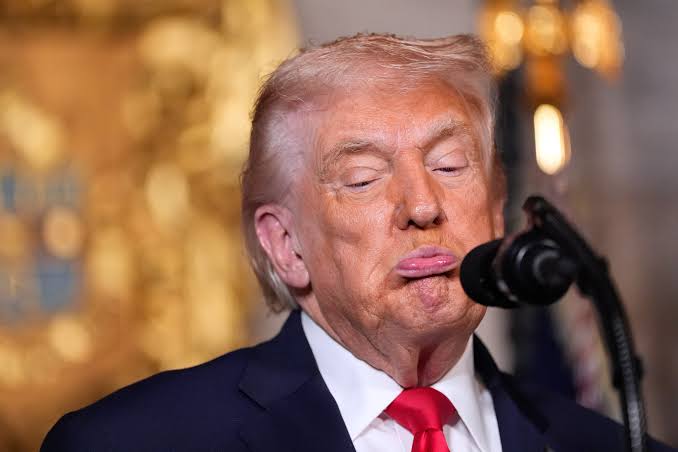
Featured image from The Daily Glitch library