More than 50 years after Neil Armstrong first walked on the Moon, NASA has sent a new crew back toward lunar space. Armstrong’s words in 1969 still echo in space history: “That’s one small step for a man, one giant leap for mankind.”
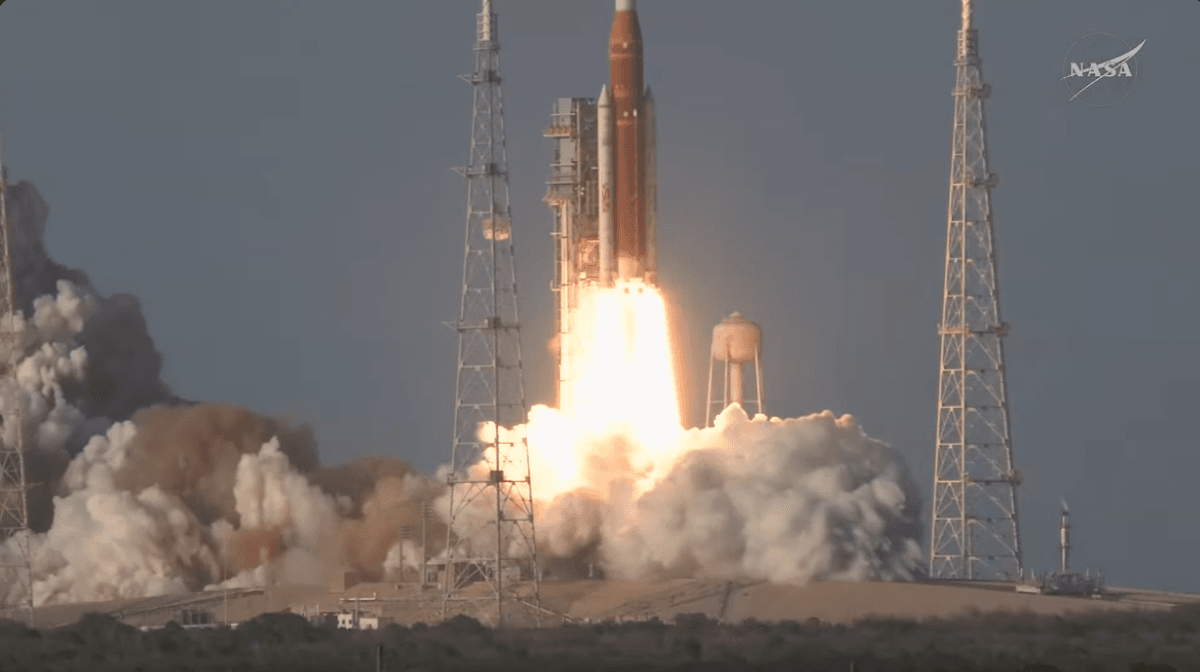
On April 1, 2026, Artemis II carried that legacy forward, roaring off from Kennedy Space Center at 6:35 p.m. EDT on the first crewed lunar flyby in more than half a century. The ground shook for miles, and a tower of fire climbed into the clouds before fading into the night. In the capsule were commander Reid Wiseman, pilot Victor Glover, mission specialist Christina Koch, and mission specialist Jeremy Hansen of the Canadian Space Agency, a four person crew carrying the next chapter of Moon travel.
This is not a landing mission. It is a test flight built to prove that NASA can send people around the Moon and bring them home safely. The agency says the trip is about 10 days long and is the first crewed mission of the Artemis program, which is meant to prepare the way for future Moon landings and later human missions to Mars.
The countdown came with its own small dose of tension, because space missions seem to enjoy reminding people they are complicated. NASA said engineers resolved a Flight Termination System issue and also checked a battery sensor reading tied to the Launch Abort System. The weather improved as the afternoon went on, which helped turn a nervous countdown into a clean launch. Rockets do not care about comfort, but they do care about details, and that is usually the part that keeps everyone honest.
Once the rocket left the pad, the ascent moved through its big milestones in order. The twin solid rocket boosters separated about two minutes after launch, the Launch Abort System came off a minute later, and the core stage cut off about eight minutes into flight. NASA then said Orion moved into higher Earth orbit, where the crew and ground teams began checking every key system before the ship heads farther out. Launch day always looks smooth from a distance. Up close, it is mostly timing, pressure, and a lot of controlled fire.
The crew is already part of the history. Victor Glover will become the first Black astronaut to fly on a lunar mission, Christina Koch is the first woman to fly on a Moon bound mission, and Jeremy Hansen is the first Canadian and first non United States citizen to go on a lunar mission. Reid Wiseman leads the flight as commander, with all four astronauts now helping write the next sentence in the Artemis story. NASA described the mission as a major step for the United States and its partners.
Before liftoff, Hansen summed up the mood with one line that fit the moment perfectly. He told launch control, “This is Jeremy, we are going for all humanity,” and launch director Charlie Blackwell Thompson answered, “Good luck, godspeed, Artemis II. Let’s go.”
NASA said Orion’s solar array wings deployed successfully after reaching space, giving the spacecraft power for the rest of the mission. The agency also said the spacecraft completed a perigee raise maneuver, which adjusted the orbit and set up the next phase of the flight. A brief loss of communication was reported during the early orbit work, but NASA said the issue was resolved and the crew could still hear ground control the whole time.
NASA says the next major step is the burn that will send Orion toward the Moon on a free return path. The crew is expected to swing around the far side of the Moon on Monday, April 6, then head back toward Earth without entering lunar orbit. Reuters said the mission will take the astronauts about 252,000 miles into space, farther than humans have ever traveled. It is a long way to go for a test, but that is the point. Nothing about rebuilding a path to the Moon was ever going to be quick or tidy.
After the flyby, Orion is scheduled to splash down in the Pacific Ocean on April 11. NASA says Artemis II is meant to help prepare for future Moon landings and build a lasting human presence beyond low Earth orbit. That is the larger story behind the noise, smoke, and careful math. Apollo proved humans could reach the Moon. Artemis II is trying to prove they can return there, stay long enough to learn something useful, and come home ready for the next trip.
Featured image via YouTube screengrab.