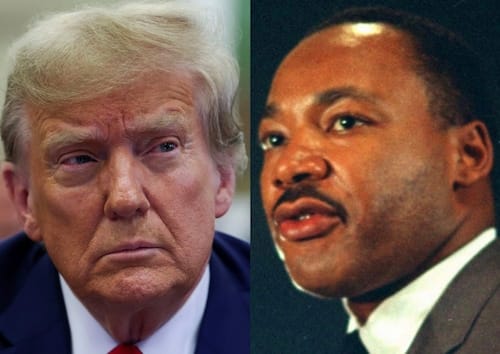
President Trump issued a late night proclamation on Martin Luther King Jr. Day after hours of silence that drew sharp criticism from civil rights groups and others.
The White House released the text at 8 15 p m, long after many public events had ended, and after the NAACP publicly complained that there had been no statement earlier in the day.
The proclamation praised King’s role in the civil rights movement, using language normally reserved for patriotic occasions rather than a direct discussion of racial justice.
“Dr. King pioneered a movement that would go on to triumphantly reaffirm our national conviction that every man, woman, and child is endowed by their Creator with rights to life, liberty, and the pursuit of happiness,” the statement read.
The text invoked the famous line from King’s Lincoln Memorial speech about the measure of a person, and it urged Americans to honor King through acts of service.
“On this day, I encourage all Americans to recommit themselves to Dr. King’s dream by engaging in acts of service to others, to their community, and to our Nation,” the proclamation said.
But the statement drew immediate pushback for what critics said was a narrow and oddly timed tribute. The proclamation made no real mention of racial injustice, policing, or the systemic harms that King fought against. Many activists and leaders called the language thin and evasive.
“Donald Trump has zero interest in uniting this country or recognizing its history and diversity,” NAACP National President Derrick Johnson said in a blunt response to the late statement. “Instead, he wants to pit us against each other so that we don’t pay attention to the fact that his net worth has more than doubled while families lose their health care and access to essential services.”
The proclamation also pointed to Trump’s decision last year to release files tied to King’s assassination, a move the White House framed as an act of transparency. The rollout, however, drew criticism at the time from civil rights leaders and King’s family, who objected to how the records were released and what they feared would be revived in the process.
Across the country, marches and memorials still drew large crowds, but many events carried a harder message this year. Speakers used the day to press issues like voting access, housing, and federal diversity programs, signaling that for many, MLK Day felt less like a ceremony and more like a call to action.
The 2026 Annual MLK March stands as a tribute to the sacrifices made and the work still calling us forward. pic.twitter.com/7qOsAr2ejw
— Mark Gibson Jr. (@MarkGibsonJr) January 19, 2026
Scholars and civil rights leaders said the tribute stopped short. They argued that quoting King without confronting the racial and economic struggles he fought reduces his legacy to safe language, while avoiding the risks and sacrifices that defined his work.
Featured image via X screengrab