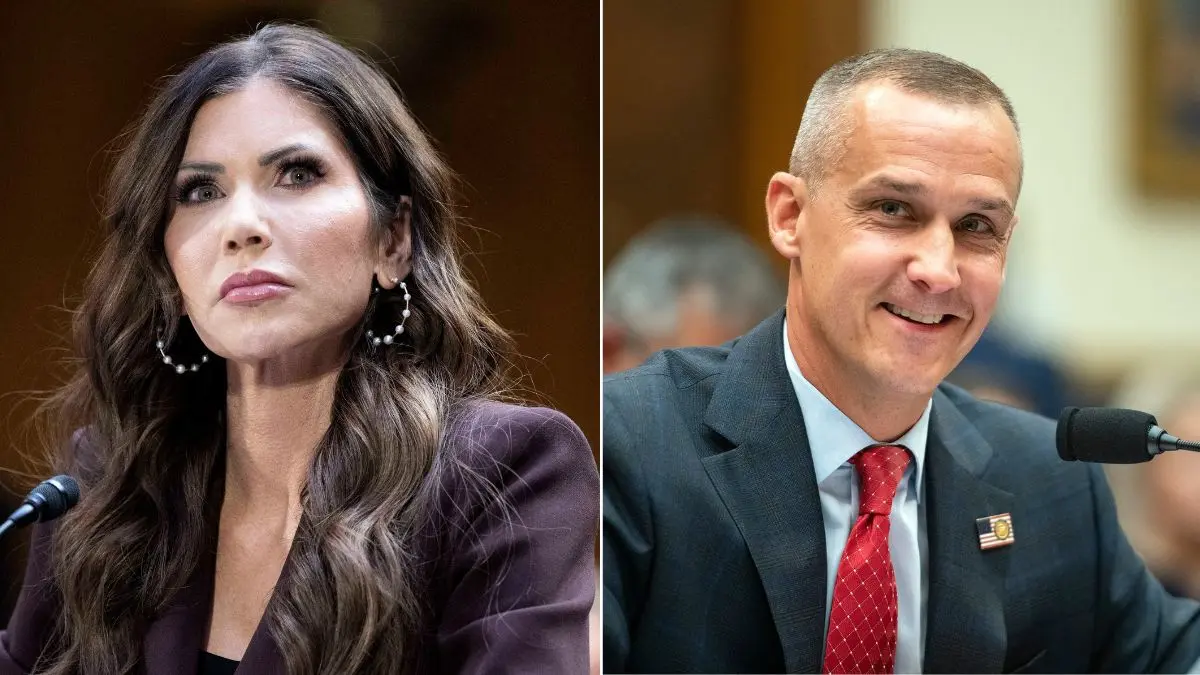
New reporting has shed light on the influence of longtime Trump adviser Corey Lewandowski inside the U.S. Department of Homeland Security during the tenure of former secretary Kristi Noem, with accounts from officials describing an unusually powerful role for someone formally classified as a temporary adviser.
Lewandowski served as a “special government employee,” a designation allowing outside advisers to work for federal agencies for limited periods. Despite the title, multiple officials described him as functioning as a central figure inside DHS, often controlling access to Noem and weighing in on internal decisions.
One source quoted in reporting by the New York Post said Lewandowski projected unusual confidence about his position within the department.
“I’m not worried. I do whatever the f–k I want. DJT will pardon me,” Lewandowski told one of The Post’s sources last year — making the flippant aside during a discussion about official actions.
In previous remarks about the speculation, Lewandowski pushed back on the allegations, saying “the rumors are false,” and describing the claims as politically motivated.
The controversy emerged amid wider scrutiny of Noem’s leadership at DHS. Lawmakers had questioned several decisions made during her tenure, including management practices and spending tied to immigration enforcement messaging.
The controversy also intersected with questions surrounding a major DHS advertising campaign. According to people familiar with internal discussions, Donald Trump has recently asked aides whether Corey Lewandowski personally benefited from a $220 million federal advertising campaign promoting immigration enforcement messaging that prominently featured Kristi Noem.
“He’s mentioned the ads several times,” one senior White House official said, describing Trump repeatedly asking aides about Lewandowski’s potential role in the contract tied to the campaign.
President Donald Trump also publicly distanced himself from the initiative after Noem testified that he had approved the effort. Speaking to Reuters shortly before announcing her removal, the president said “I didn’t know anything about that,” referring to the roughly $222 million advertising push.
In earlier remarks following the testimony, Trump said he “wasn’t thrilled” with Noem’s description of the program, according to officials familiar with the matter.
During congressional hearings examining the department’s activities, Noem was also asked about her relationship with Lewandowski and his role inside the agency. Both individuals have denied rumors of a personal relationship that circulated in Washington political circles.
Officials inside DHS reportedly viewed Lewandowski as operating in a role similar to a chief of staff, even though he did not formally hold the position. According to accounts from department staff cited in multiple reports, he frequently participated in meetings on policy decisions, personnel issues, and strategy discussions.
Because of his classification as a special government employee, Lewandowski was not subject to the same disclosure rules and restrictions that apply to full-time federal appointees, a structure that raised questions among some officials.
Noem ultimately left the department in March 2026 after President Trump announced he would replace her with Markwayne Mullin, a Republican senator from Oklahoma. The change followed weeks of questions about DHS leadership and the political fallout surrounding the hearings.
Lewandowski’s future role in the administration remains unclear. Reports have indicated he may depart the department following Noem’s exit, though he has remained a longtime adviser within Trump’s political orbit.